"Cross-check Rajesh"
Rajesh Kumar · 42
- Compare battery options side by side
- Verify prices and warranty terms
- Find the exact fit for his Swift
- Can't browse without calling
- No price transparency online
- Unclear which battery actually fits
Most apps are built for people who already know what they want. Volta was built for the person whose car won't start at 8pm — who doesn't know their battery model, doesn't speak English, and just needs help. Now.
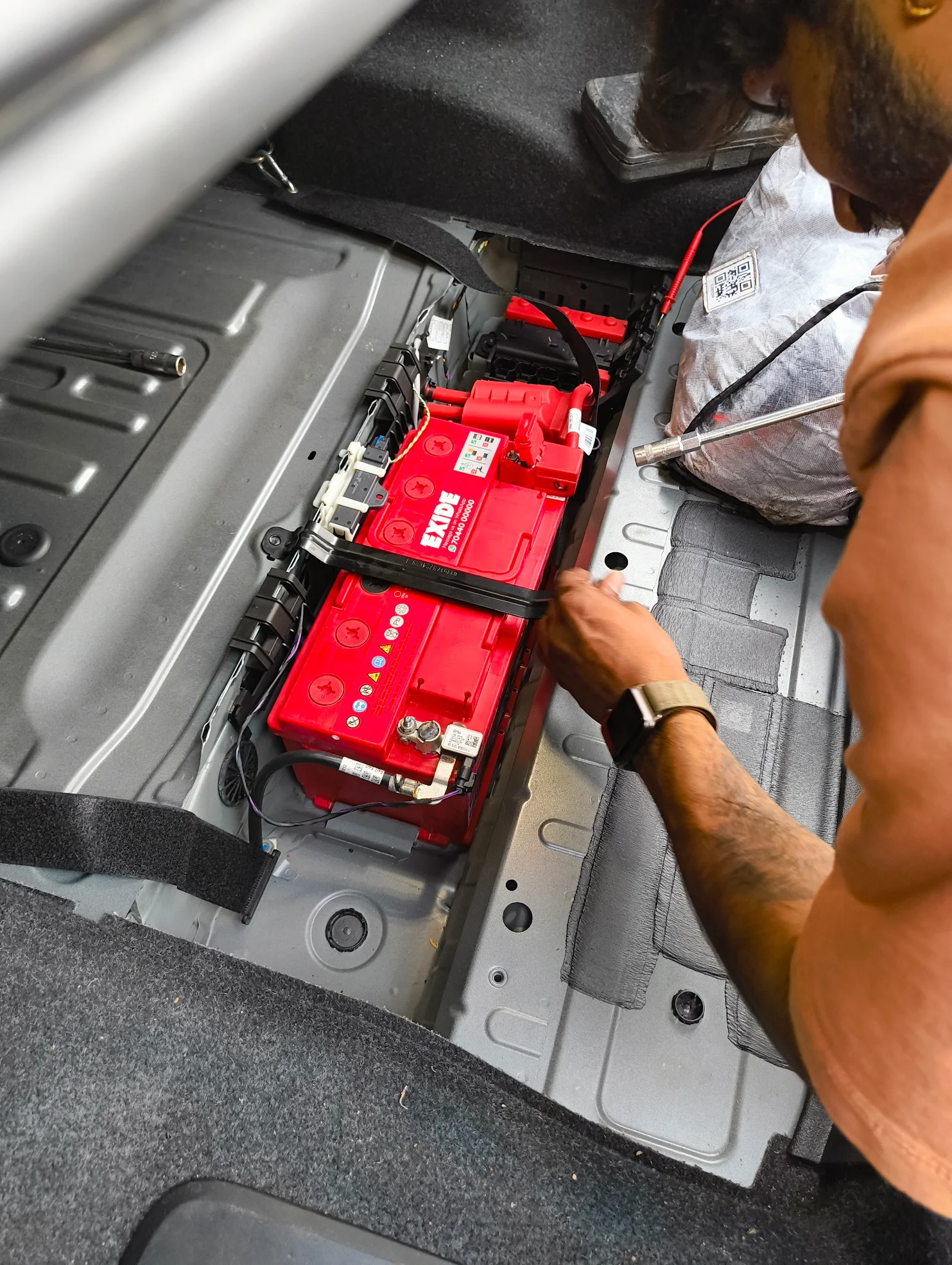
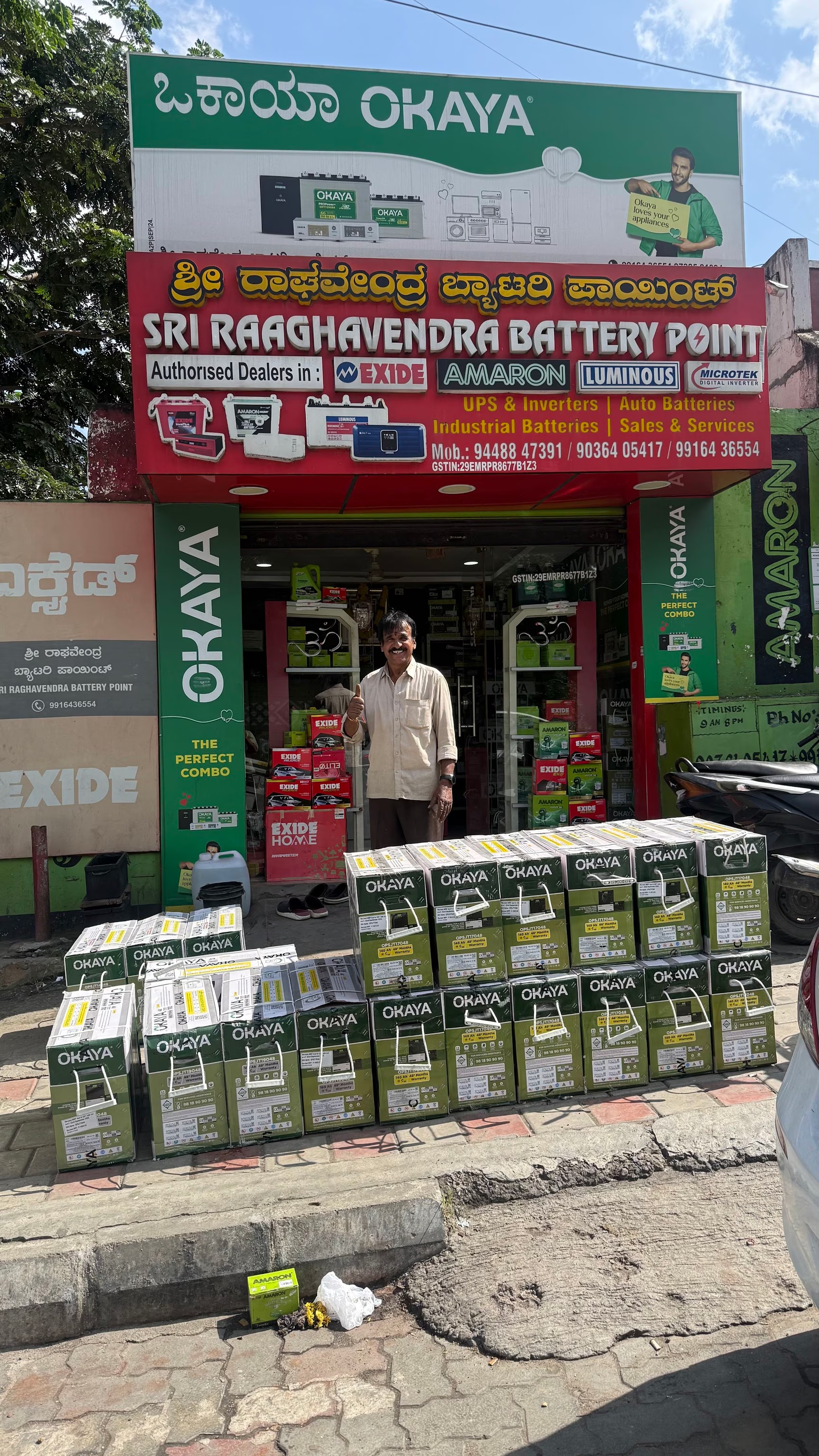
Sri Raghavendra Battery Point is a battery distributor in Jayanagar, Bangalore. They sell automobile batteries (car, bike, inverter) from multiple brands. Every customer question — "Do you have X battery?", "How much?", "Where are you located?" — comes as a phone call. The owner handles 30-50 calls daily, often repeating the same information.
The business had no digital footprint. Customers couldn't check prices or availability on their own. Every enquiry required a phone call — disrupting operations, creating wait times, and making it impossible for the owner to focus on in-store customers.
Before jumping to solutions, I conducted comprehensive research to understand the battery retail industry, small business digital transformation challenges, and customer behavior patterns. This dual approach — combining primary user research with secondary industry research — ensured every design decision was grounded in real insights.
Through interviews with the shop owner and observation of 20+ live customer calls, four user archetypes emerged — each defined not just by what they want, but by what they can't easily do. Their literacy levels, languages, and emotional states differ so completely that a single interface couldn't serve them all.
Rajesh Kumar · 42
Priya Sharma · 29
Kamala Bai · 58
Arjun M. · 32
Instead of designing one compromised product, I created three purpose-built interfaces — each optimized for a specific user type and use case. All three pull from the same database, so when the owner updates a price once, it syncs everywhere.
The most important design decision wasn't visual — it was architectural. Three surfaces, one shared database. This structure enables Phase 2 (multi-shop platform) without rebuilding from scratch.
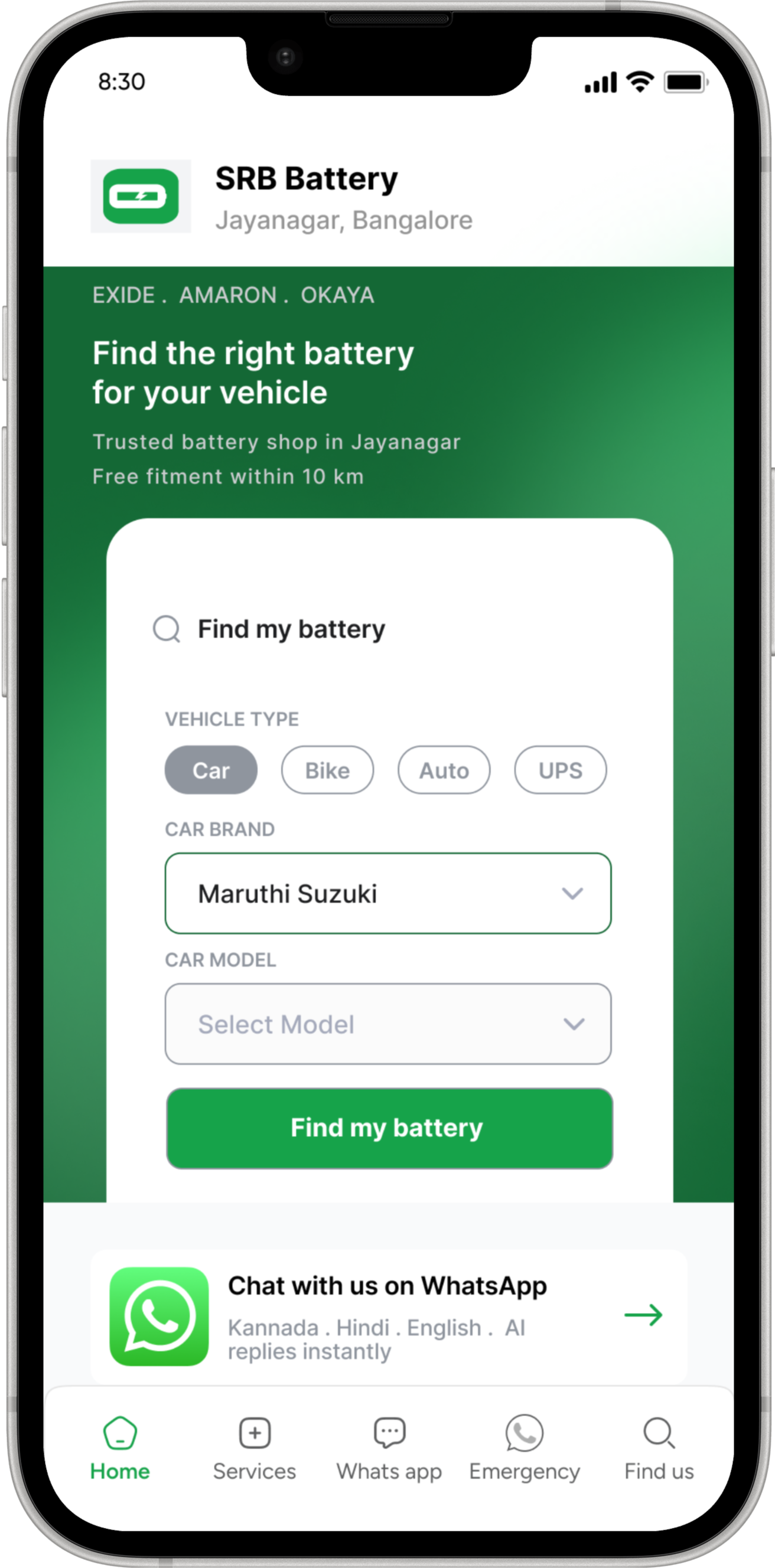
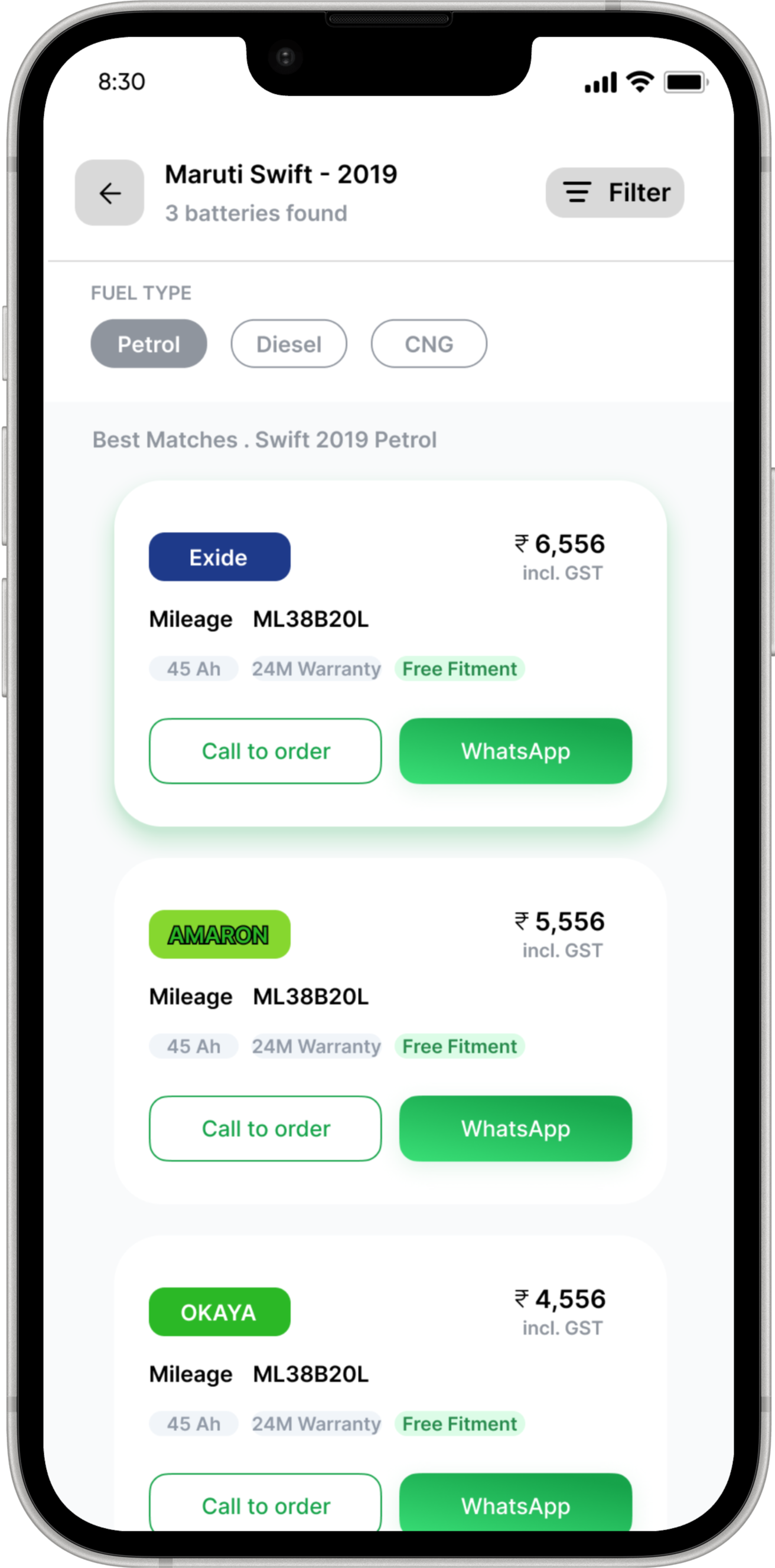
Most local battery shops don't have a website. The ones that do treat it like a phonebook listing — name, address, phone number. SRB needed something that did real work: help a customer find the exact battery for their car, surface prices transparently, and route them to WhatsApp or a phone call without friction. Built mobile-first, because nobody is researching batteries on a laptop.
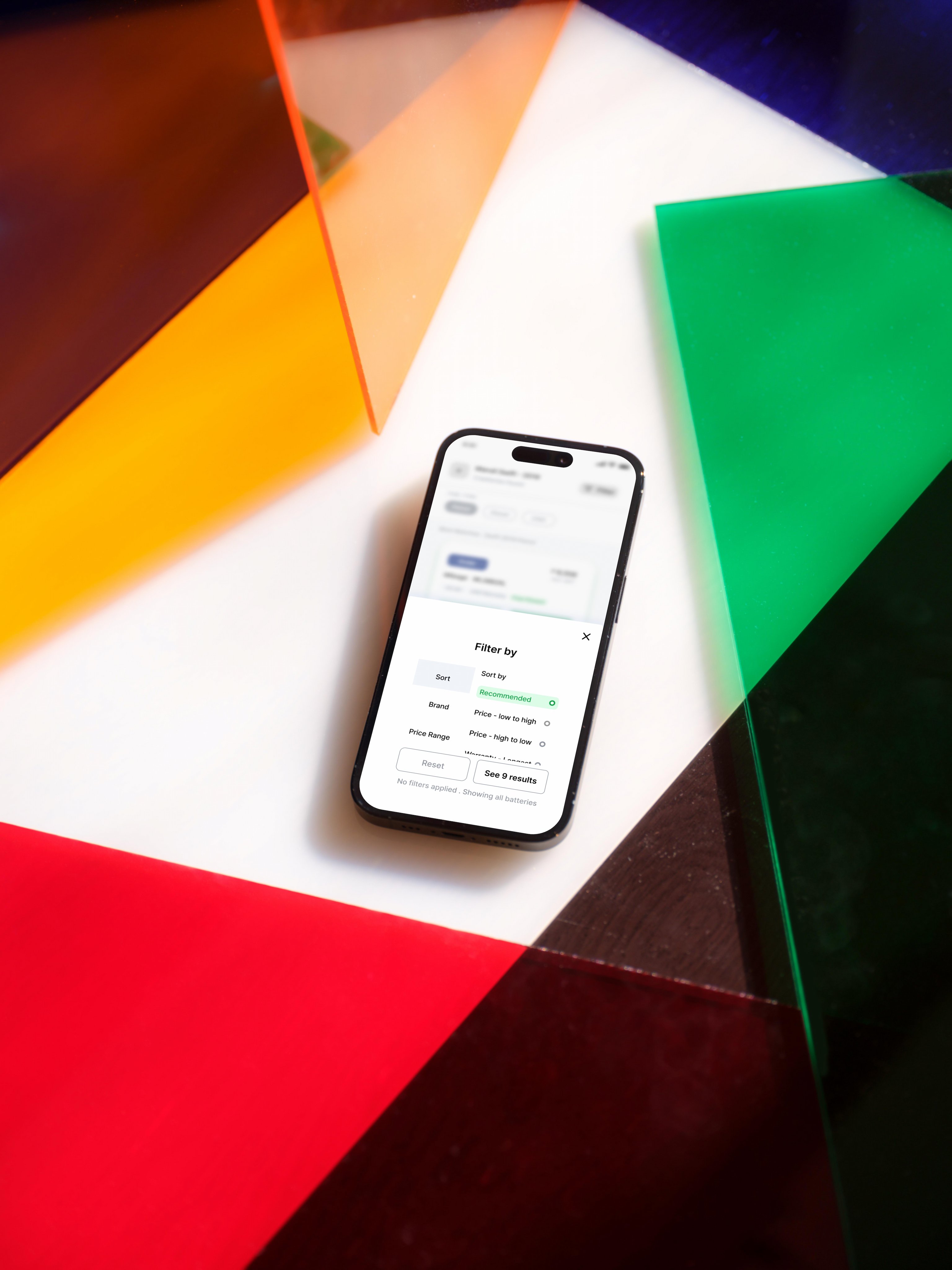
No registration, no log-in, no detail pages buried two clicks deep. The customer arrives knowing only their car, leaves knowing exactly which battery fits — with prices, warranty, and a WhatsApp button on every option.
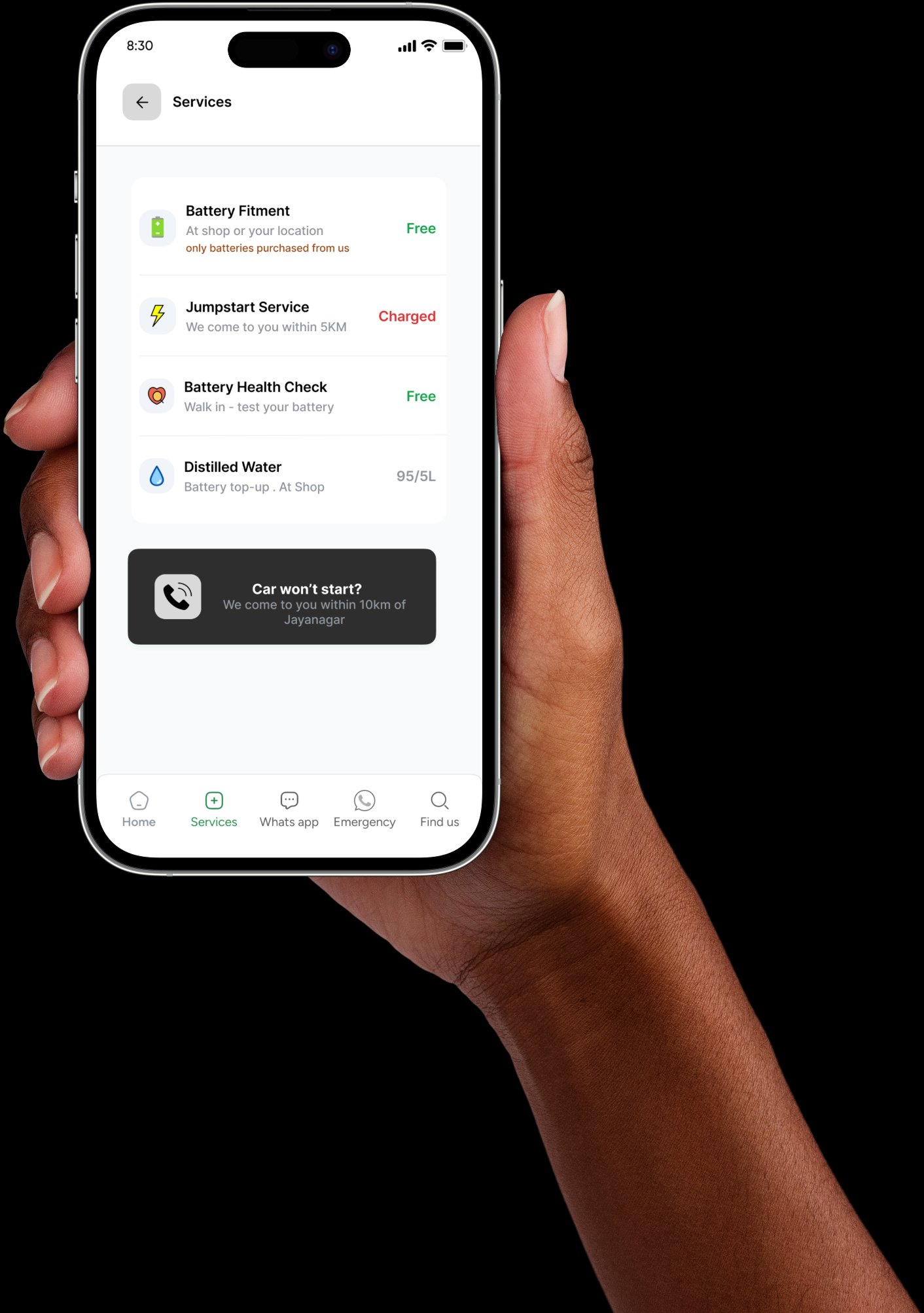
SRB doesn't just sell batteries — they fit them, jumpstart cars, run free health checks, and top up distilled water. The services page surfaces what was previously locked inside the shop owner's head and word-of-mouth.
Designing for a local shop's customer is different from designing for a SaaS product. The interface had to feel familiar, trustworthy, and forgiving — for users who might be doing this once every five years.
No registration. No log-in. No friction between curiosity and contact. Just a customer, their vehicle, and the right battery — in under a minute.
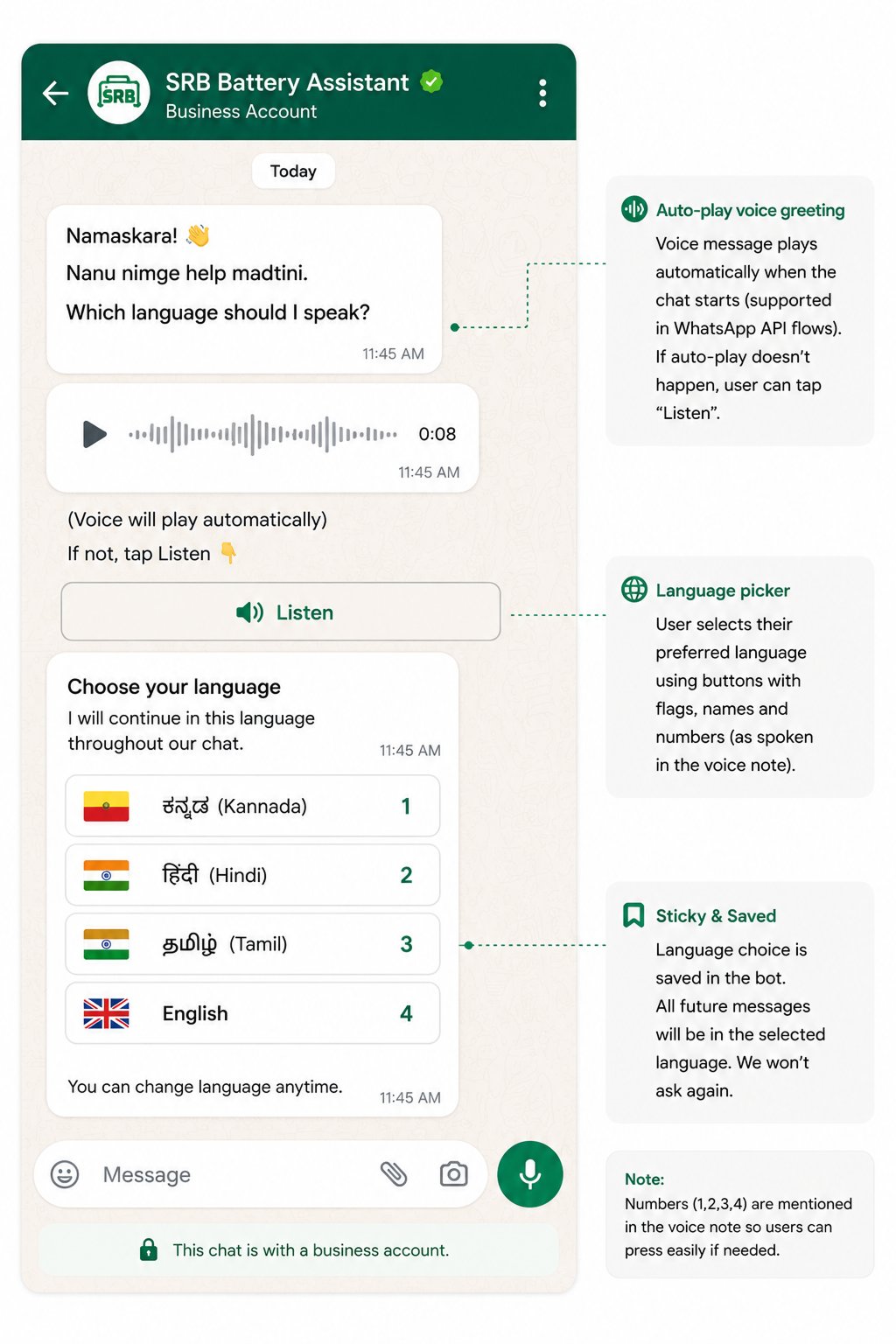
Asking someone to download an app is friction. Asking them to open WhatsApp is muscle memory. So the AI lives where 400 million Indians already chat — speaks four languages, plays a voice greeting for non-readers, and lets users press a number to choose their language.
Many of Sri Raghavendra's customers don't read English — and some don't read at all. So the chat opens with an auto-play voice message in Kannada, followed by a numbered language picker. The voice note says the numbers aloud (1, 2, 3, 4) — anyone who hears it can press the right button without reading.
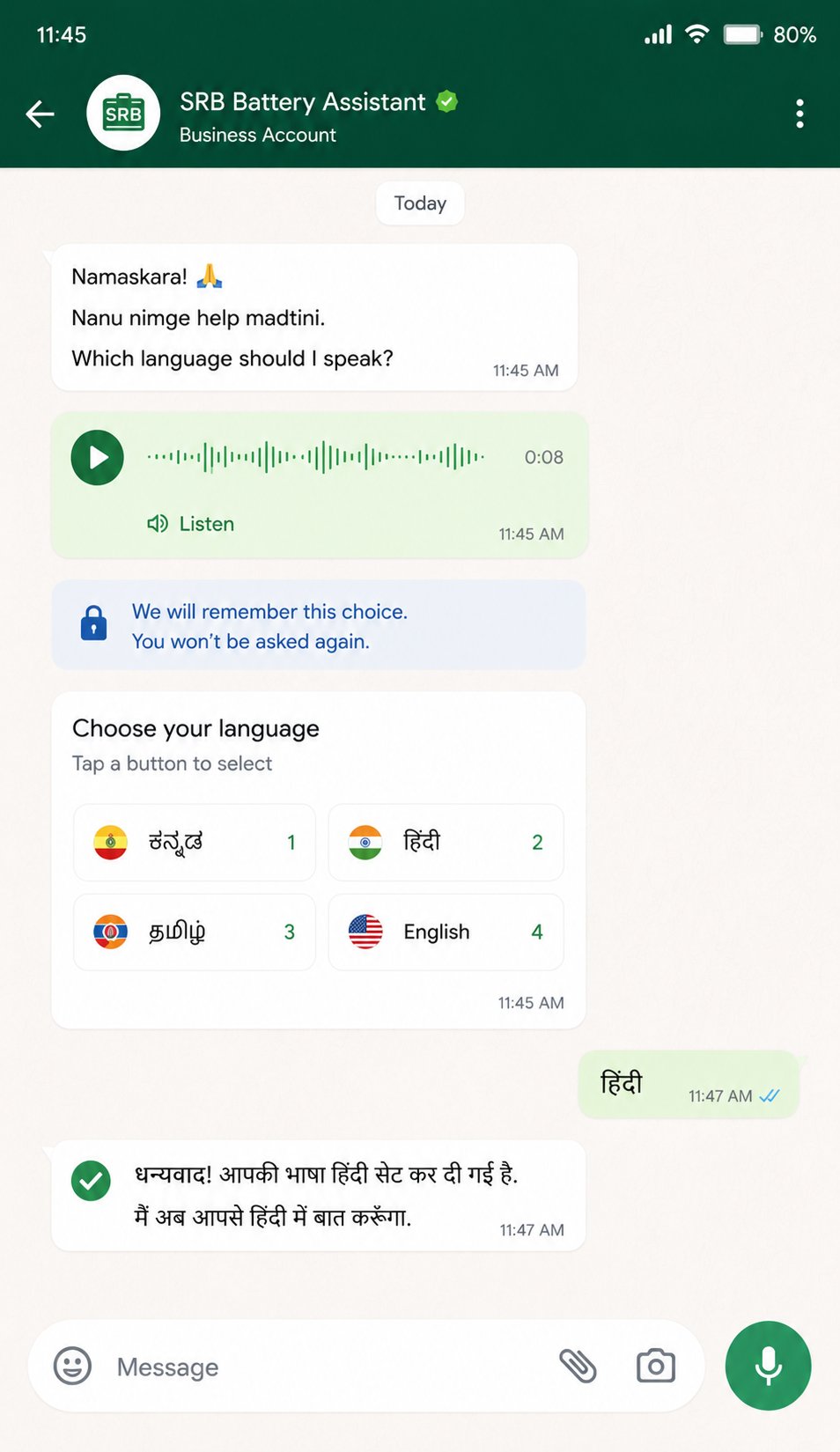
The blue system pill borrows WhatsApp's own pattern for trust messages — the same styling used for end-to-end encryption notices. When users see it, they recognize it: this is the platform speaking, not the brand.
After picking Hindi, the bot replies in Hindi. The user types हिंदी to confirm — no retraining needed, no English fallback, no "are you sure?" friction.
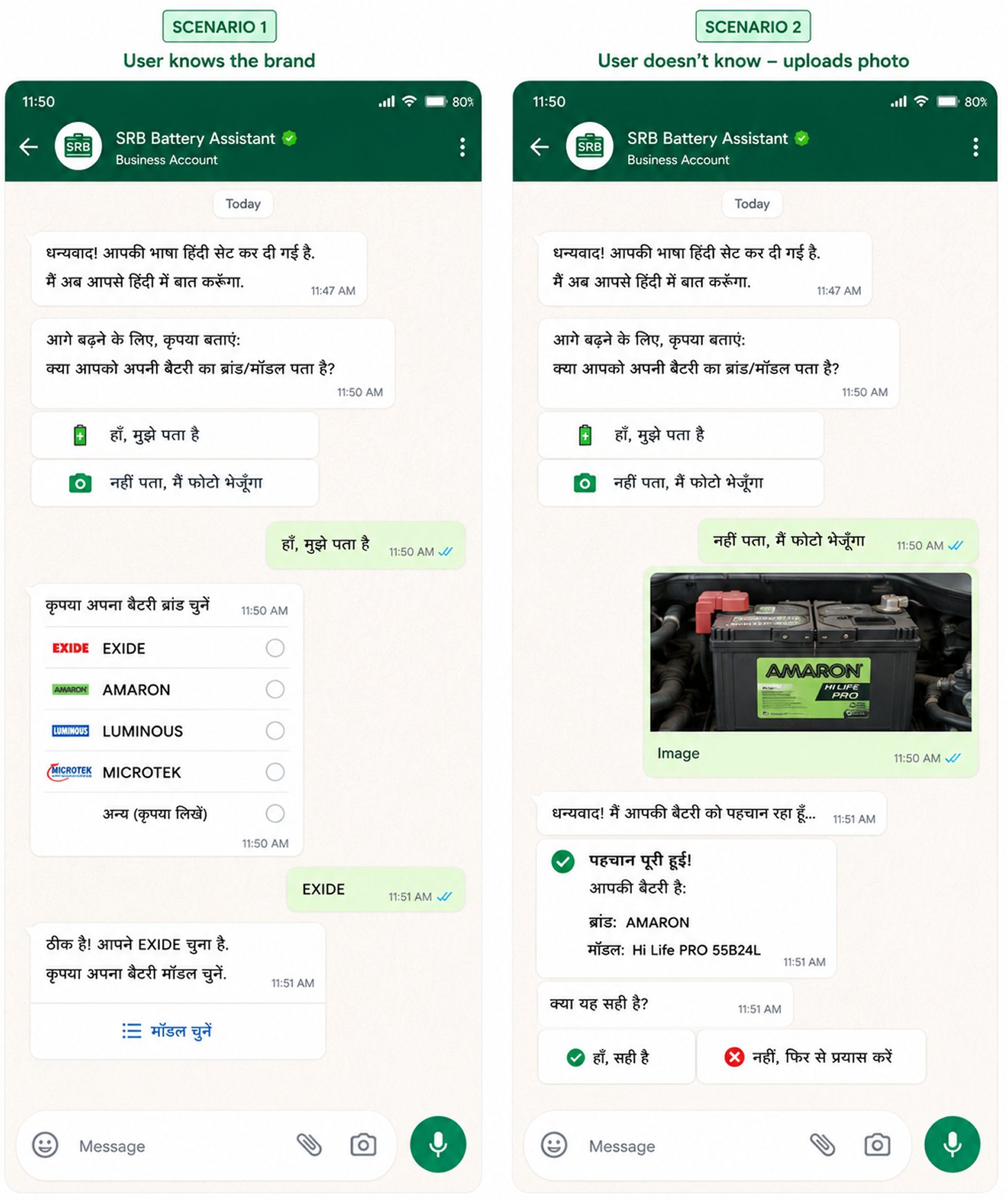
A customer who knows their battery brand and a customer who doesn't shouldn't meet the same form. The AI branches: tap a brand from the list, or send a photo and let computer vision do the work. Same outcome — battery identified, ready to quote.
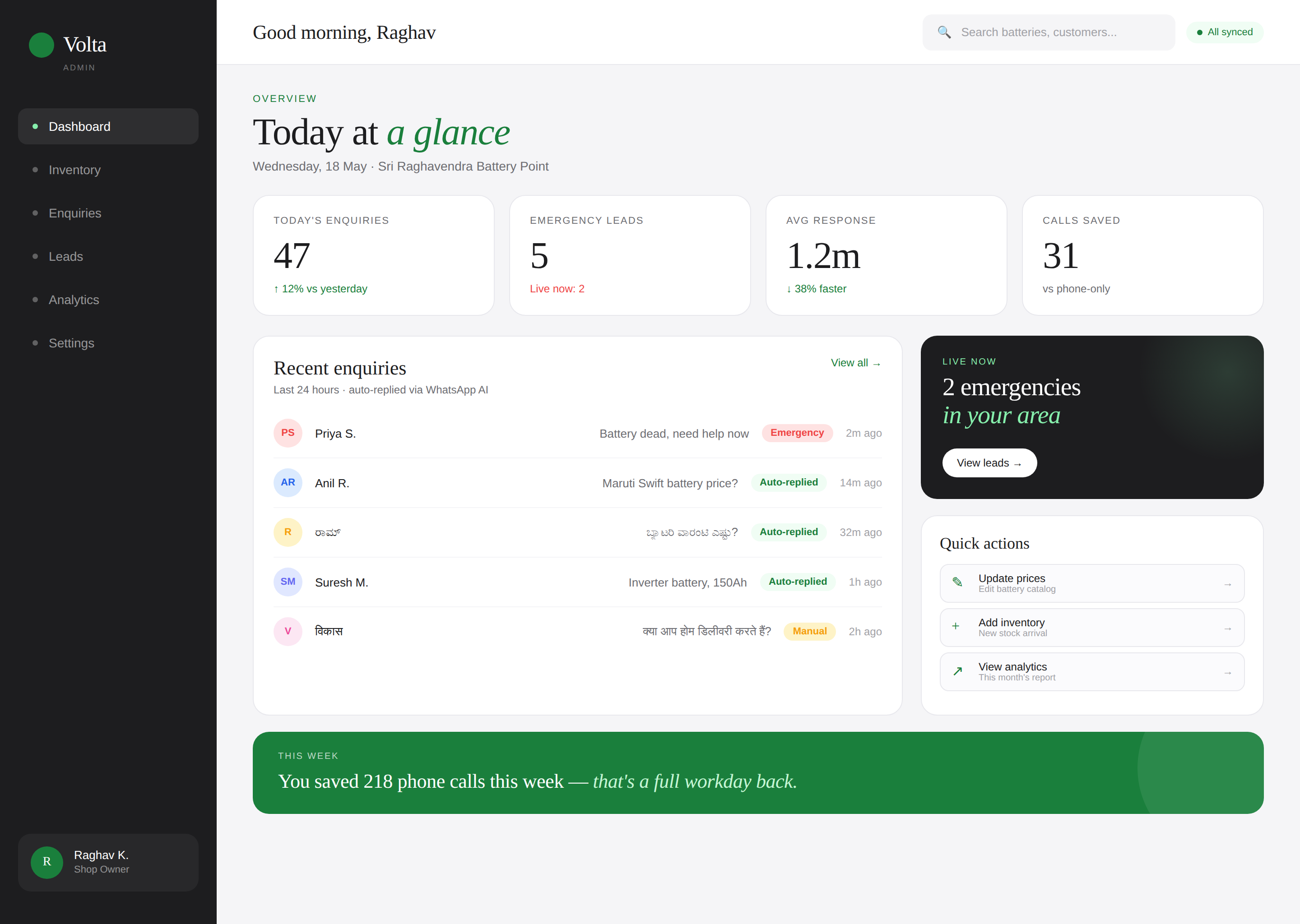
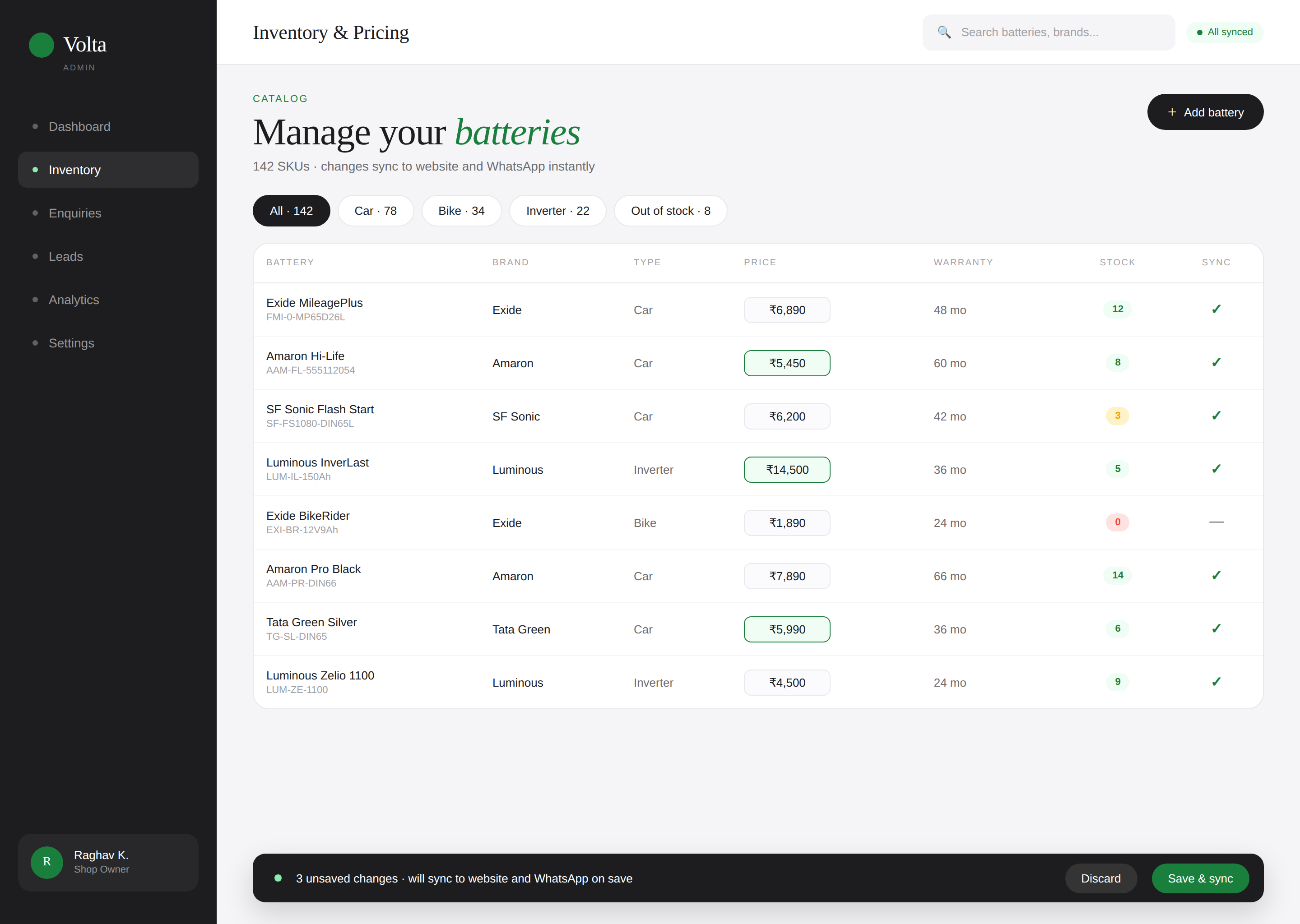
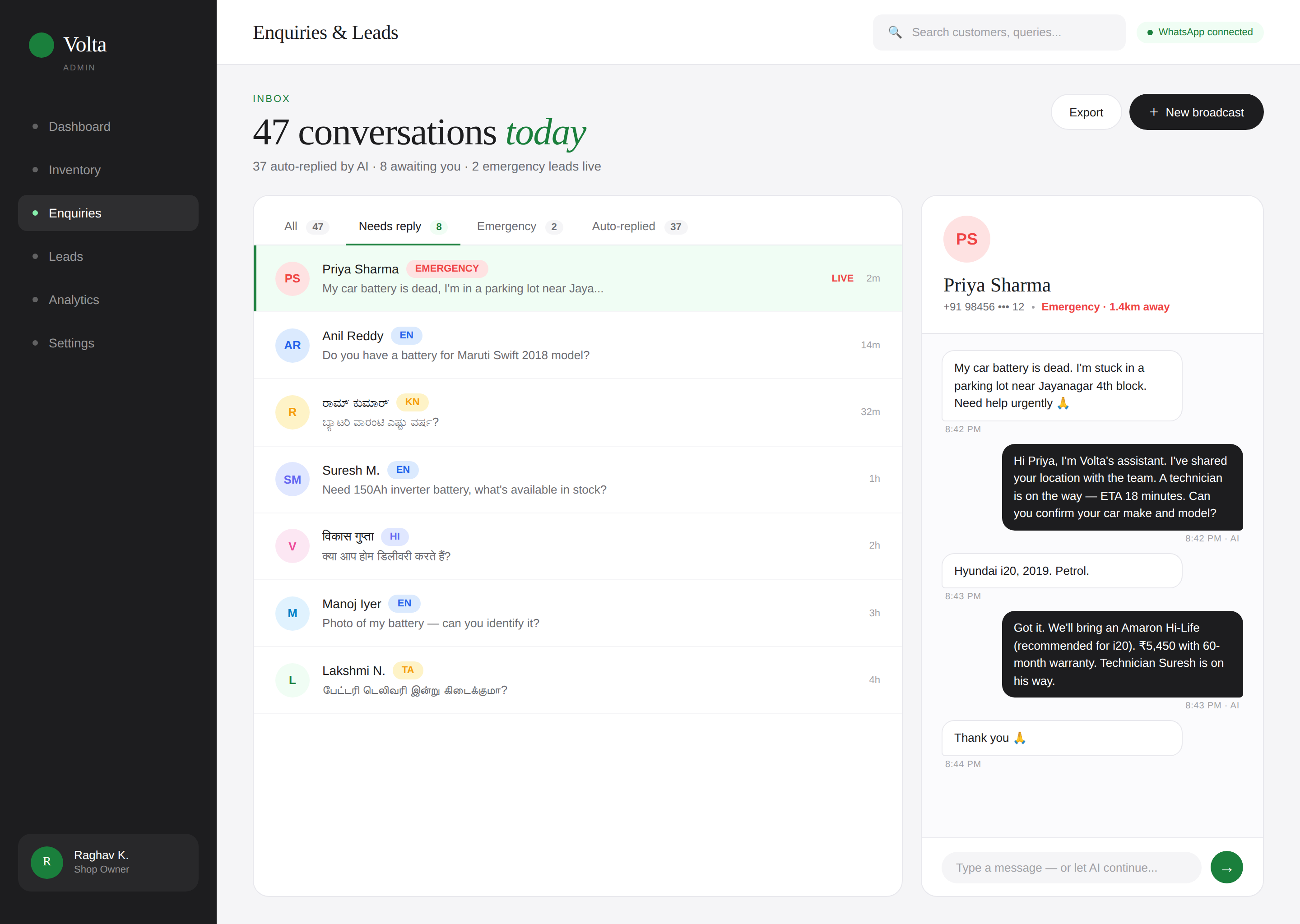
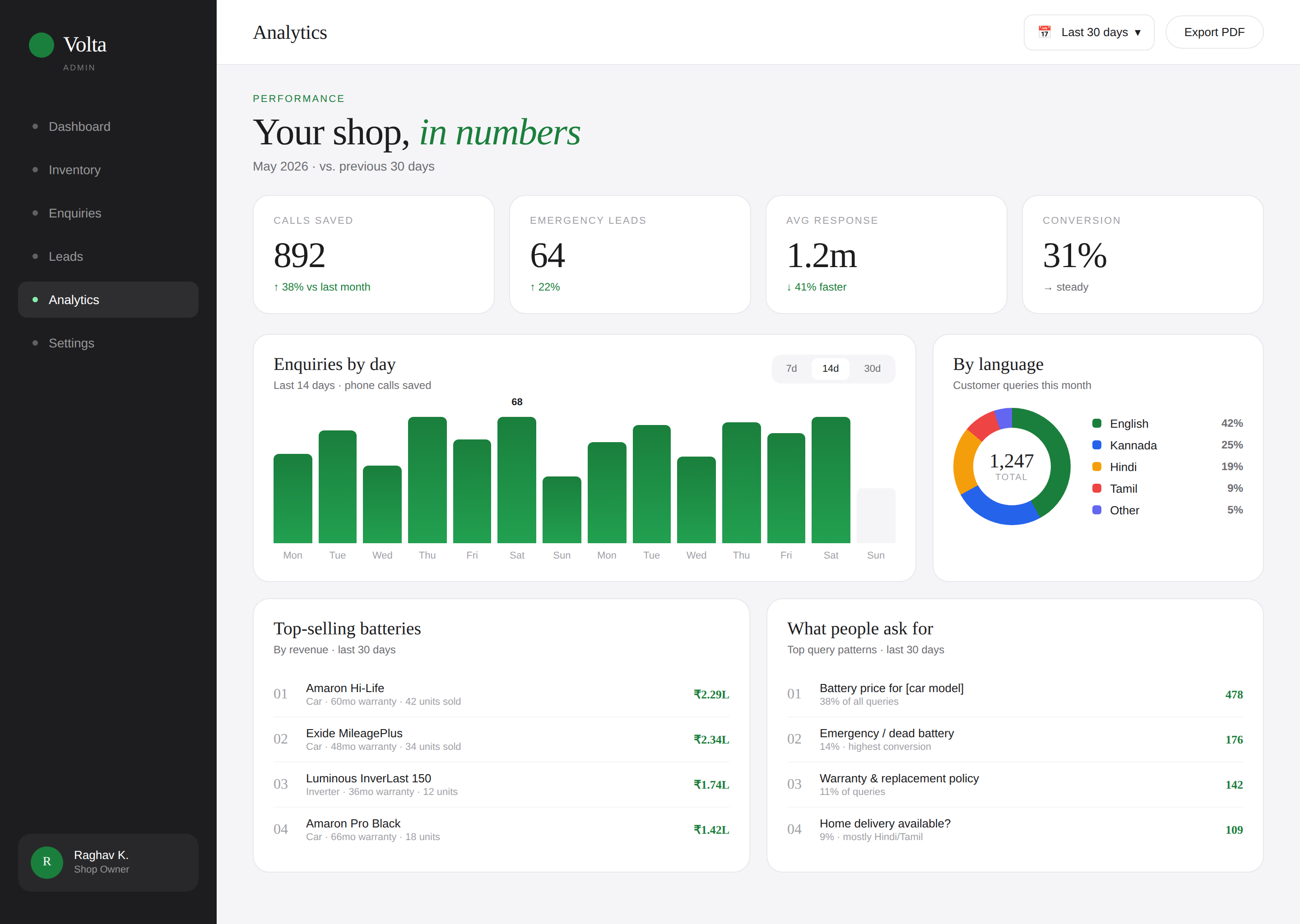
The shop owner is the only admin user. He doesn't read English fluently, doesn't have time for training, and updates prices between customer calls. So the admin tool had to feel less like a CMS and more like a control panel — every action visible, every change traceable, nothing buried in nested menus.
Every decision — the dark sidebar that recedes, the serif display type that signals authority not enterprise-blandness, the green that ties back to the WhatsApp brand, the single sticky save bar — comes from one constraint: the owner has 30 seconds between customers.
From installation to emergency support, every service is designed for reliability and customer convenience.
Professional battery installation, on-site repairs, and emergency jumpstart support with transparent pricing.
Dedicated support for commercial vehicles, including bulk orders, fleet maintenance contracts, and priority response.
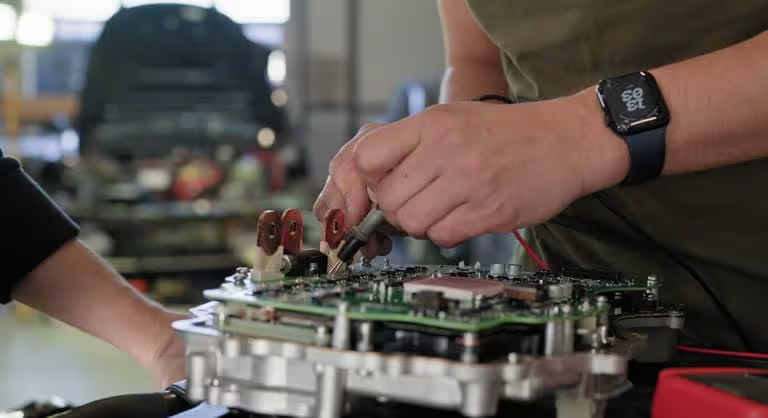
Complete battery health diagnostics, professional charging, and performance testing to extend battery life.
Most battery retailers still rely on phone calls or have basic e-commerce websites. Volta was designed from the ground up to serve diverse user needs with technology that actually helps.
Based on digital transformation research across small businesses and manufacturing sectors, similar-scale implementations achieve measurable returns within 12-18 months. Here's what Volta is designed to deliver:
Phase 1 gives one shop owner a complete digital presence. Phase 2 turns that into a hyperlocal commercial platform — connecting customers to verified battery dealers across any city, in their language, in their moment of need.
Every decision traces back to a real user insight or business constraint. Nothing was designed without first understanding who needed it and why — and nothing was assumed.